Higher interest rates. Nervous investors. A falling stock market? Not so fast!
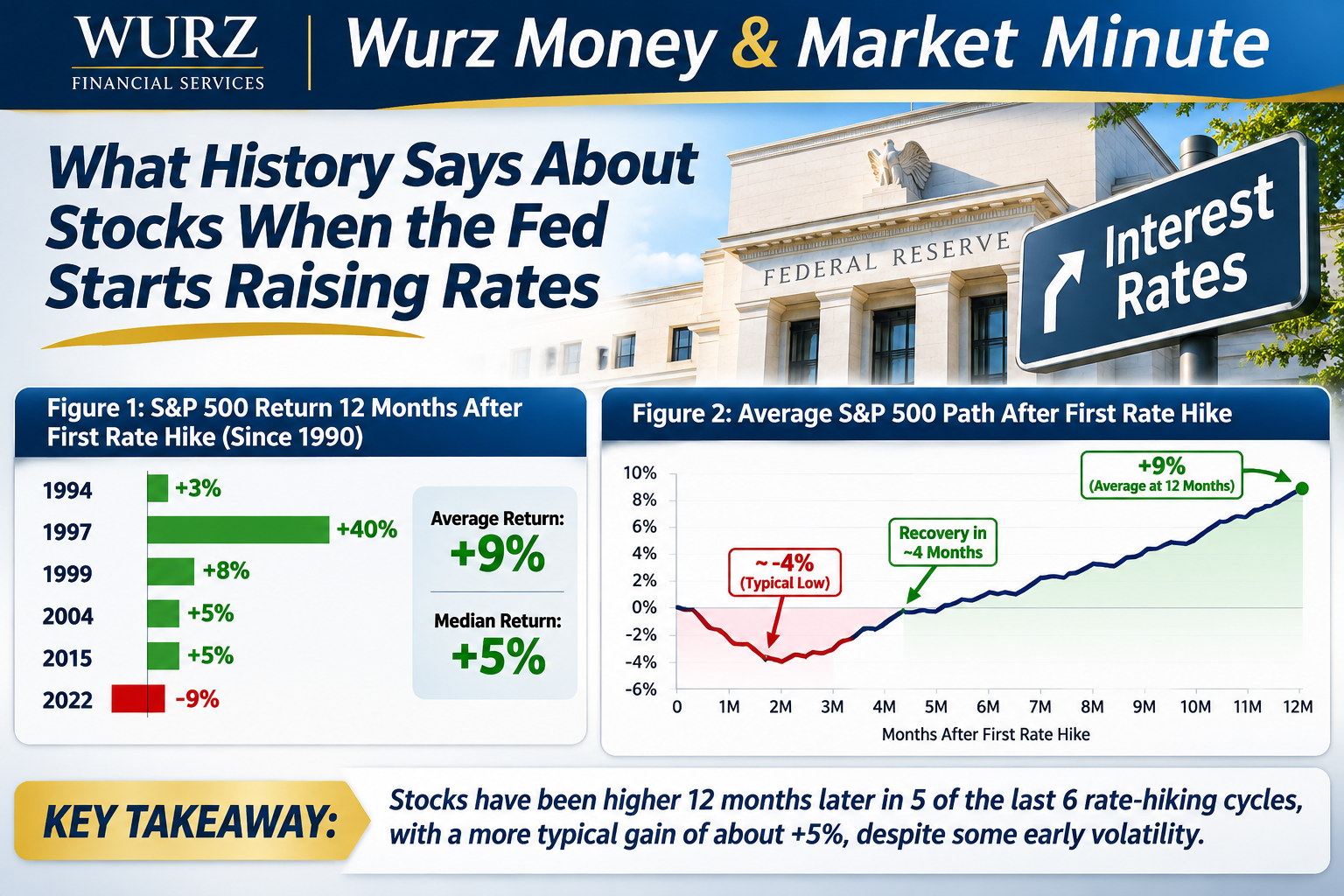
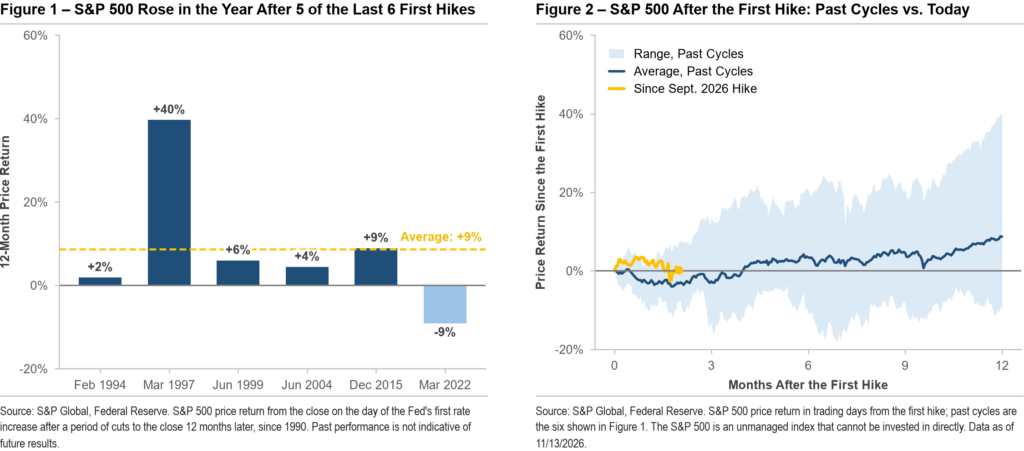
History tells a surprisingly different story. Since 1990, the Federal Reserve has launched six rate-hiking cycles. And in five out of six, the S&P 500 was HIGHER just 12 months later!
The average gain? 9%. The median? 5%.
But here’s the twist: The ride wasn’t always smooth. Stocks typically stumbled about 4% early on before recovering, on average, within four months and climbing higher.
Why? Because the Fed often raises rates when the economy is running strong—and that same economic strength can fuel corporate profits and stock prices.
Of course, 2022 was the exception, with soaring inflation, aggressive rate hikes, and a 9% market decline.
The bottom line? Rising interest rates don’t automatically mean falling stocks. History reminds us that short-term turbulence doesn’t necessarily derail long-term growth.
Sometimes the biggest risk isn’t what the Fed does next. It’s how investors react to it.
Important Disclosures
The information and opinions provided herein are provided as general market commentary only and are subject to change at any time without notice. This commentary may contain forward-looking statements that are subject to various risks and uncertainties. None of the events or outcomes mentioned here may come to pass, and actual results may differ materially from those expressed or implied in these statements. No mention of a particular security, index, or other instrument in this report constitutes a recommendation to buy, sell, or hold that or any other security, nor does it constitute an opinion on the suitability of any security or index. The report is strictly an informational publication and has been prepared without regard to the particular investments and circumstances of the recipient.
Past performance does not guarantee or indicate future results. Any index performance mentioned is for illustrative purposes only and does not reflect any management fees, transaction costs, or expenses. Indexes are unmanaged, and one cannot invest directly in an index. Index performance does not represent the actual performance that would be achieved by investing in a fund.